


The method in ancient India for providing education was based on very scientific and psychological basis.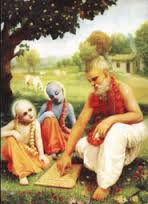
In order to attain education every student has to pass an exam as asked by his Guru, as in Prashnopnishad Maharshi Piplad asked from his four disciples to practice one year brahmcharya (celibacy) and then come to take knowledge. What a scientific and fantastic method for providing education! because without pure and chaste mind no one can explore the hidden truths of nature, this is the reason why so many intellectual & spiritual heroes are found to be whole life celibate as Bheeshma Pitahma, Shukdeva , Shankaracharya, Ramkrishna Paramhansa, Swami Vivekananda, Paramhansa Yogananda, Chandrashekhar Azad, Bhagat Singh and most of the daredevil revolutionaries etc. presently Dr. A.P.J Abdul Kalam, Atal Bihari Bajpayee and Anna Hajare who brought a revolution in their times. In western countries also you can get such examples such as Newton, Adam Smith, etc. instead of attracted towards sensual pleasures devoted their life for the well being of society.
https://www.youtube.com/watch?v=BDXIgqvJeY0
So, come back to the topic Ancient Gurukul education has mainly three process or methods of teaching:
- “Sravana” i.e, acquiring knowledge of Vedas or ‘Shrutis’ by listening.
- “Manana” i.e, making students to think, analyse and derive their own conclusions.
- “Nidyasana” i.e, meditating on what truths they came to know by the guidance of their Guru and applying them in their own life.
Myth # In ancient India women are not allowed to study?
Truth: In ancient India women are given equal rights in each and every sphere of life. Many educated women like Maitreyi, Apala, Gayetri, etc. are there who use to teach and added new milestone in ancient education.
Myth# Lower class people have no respect in the society in that Vedic period?
Truth: During vedic period person was no context in relation to which cast or class he belongs to, a person is respected according to his personal uniqueness. You will surprised to know that Ved Vyas who brought to the world’s largest epic Mahabharata was a son of a fish-women Satyavati (also known as Matsyagandha), Vishwamitra, who was a medium of giving the world Gayatri Mantra, was a not a Brahmin, by birth, Vashishtha, the highly prominent sage during Lord Rama time period, was son of Urvashi, a prostitute. Valamiki who was born in a low class family, and in his youth was a rouge, but after getting enlightenment, he wrote The Ramayana & is highly appreciated all over India.

Ancient India’s distinguished Educational Institutions
- Taxila University*: (7th BC).
- Nalanda University (450 A.D)
- Vallabhi University (475-775 A.D)
- Vikramshila University (775 A.D)
- Jagaddala University (1084-1130 A.D)
- Audantpuri (749 A.D)
- Nadiya or Navdweep (11th)
- Mithila University (From Vedic period till 15th)
* Taxila is the first university of the world It was famous for Medical Studies. Great persoalities like Kautilya, also known as Chanakya, who wrote world famous books like “Chanakyaneeti” &” Arthashastra”, Pushyamitra, Panini , famous physician Jeevak serve this institution.
Minimum age for entering in university was considered to be 16 years, and he has to pass a tough entrance examination test before taking admission.
Mainly 18 subjects are taught in the university which is planned in such a way that they may prove helpful to make the student stand on their foot in their future life, list of some subjects are as follows: Politics, Philosophy, Mathematics, Ayurveda, Surgery, Archery, Astrology, Future Forecasting, Farming, Business Strategies, Maintaining Accounts, Horse Riding, Magical Tricks (Indrajaal), Snake Hypnotizing (Nagvashikaran), Prediction of hidden money (Gupta nidhi anveshan), music, dance & painting.
Varanasi, Mathura, Kanchi, are famous for religious studies and covering almost all aspects of human life including philosophy ,literature, politics, mathematics, ayurveda, astrology, etc. Students from many countries of South Asia like China, Japan, etc.
For common people and uneducated class which include peasants, cobblers, fisherman, etc. our ancient sages certain principles or rituals like following practices like doing fasting, taking bath regularly, doing prayer both times at dawn and dusk, etc. which helps them to make their life healthy and disciplined.
Thus by these you can get a glimpse of ancient Indian education.

